Generative art
Appreciation, creativity and process over results

Beginnings of generative art: conception, etymology and technology
The beginnings of generative art date back to mid-1950s: an artistic practice that nowadays still continues to be discussed in terms of aesthetics and art theories. One of the great influences and pioneers of the movement was the psychologist and cybernetician Gordon Pask in 1950, who inspired the philosophical area that concerns generative art.
The first generative art exhibition was called Generative Computer-grafik, showing the work of Georg Ness, who later produced the first PhD thesis in generative art. This thesis was consumed by a small but growing community, assimilating the terms “generative” and “computational” at the same time. In 1965, Georg Ness exhibited in Stuttgart in conjunction with Frieder Nake, who used the term "generative" to describe art that was produced entirely or partially through computer software. Then, Manfred Mohr, would produce drawings through a computer in 1968 calling them "generative art". Others, like Max Bense, called it “generative aesthetics”.
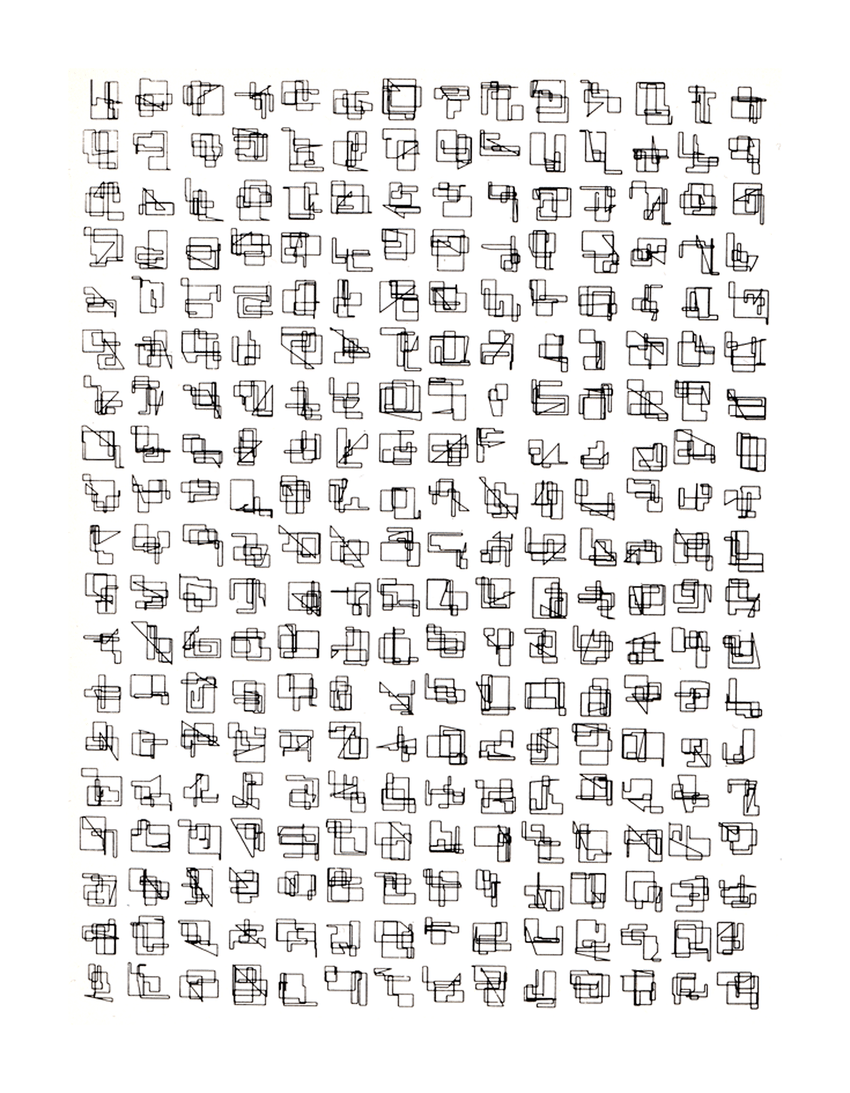
The discipline of generative art has provided traditional art schools with methodologies beyond its limitations, carrying at the same time advantages and difficulties. Harold Cohen, an abstract painter from London during the 60s, gave up the brush, arguing that computer art would gave him better understanding about his creative process. Ernest Edmonds also leave the brushes aside for the computer as it would allow him to produce art in a more interesting way: the computer and software capacities allowed the artistic expression, manipulation and realization of ideas that where impossible before in real media.
Generative artists also declare that the innovation in contemporary fine art could not have been achieved except through computer graphics, and was this interaction between the human being and the machine, that allowed the great technological advances throughout history, and art has not been the exception.
The process over the results
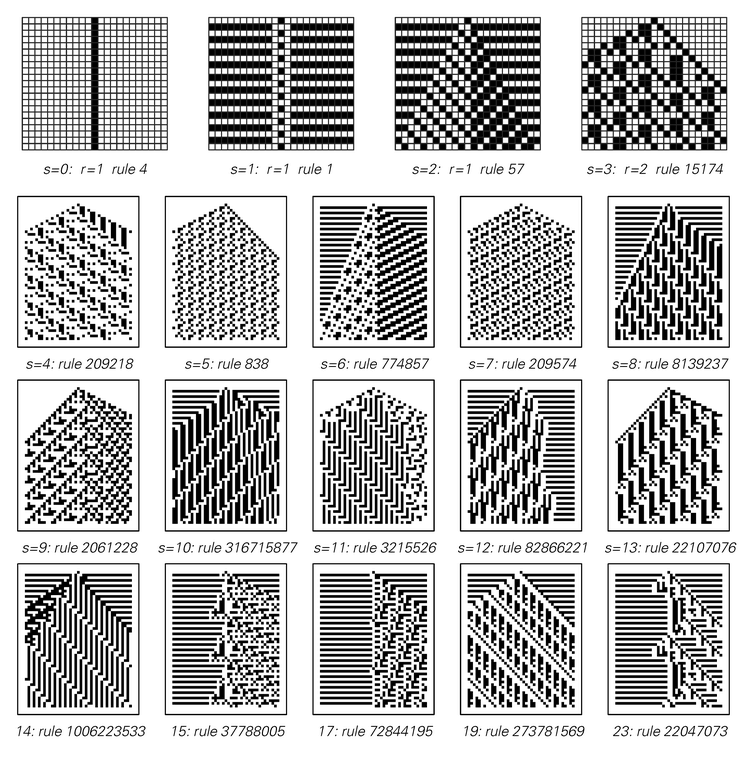
Generative art was born from cybernetics and general systems theories, shaped by ideas about structures and processes related to computational sciences. This entails that the creative process replace the singularity of the artist by a team of people from a wide range of areas of expertise, from computer scientists to engineers, with many of these processes being related mainly to AI or A-life development, and nowadays with Cellular Automata, L-systems and Evolutionary Programming processes that could only began to being used once computers reached new standards of performance and mass production.
During the creative process, the artist establishes a series of rules in which the computer system takes at least a certain role in the decision making, also called rule-based programming. The programming of the computer system can have two variations:
Programming through algorithms.
Programming through constraints.
An algorithm is basically described as a step-by-step system of instructions that computer systems can execute only if certain conditions are satisfied. Constraint-based programming considers the establishment of behavior parameters for certain elements, for example: “A should never be bigger than B” or “C can not be inside A”, with the freedom to apply these constraints left over to the computer.
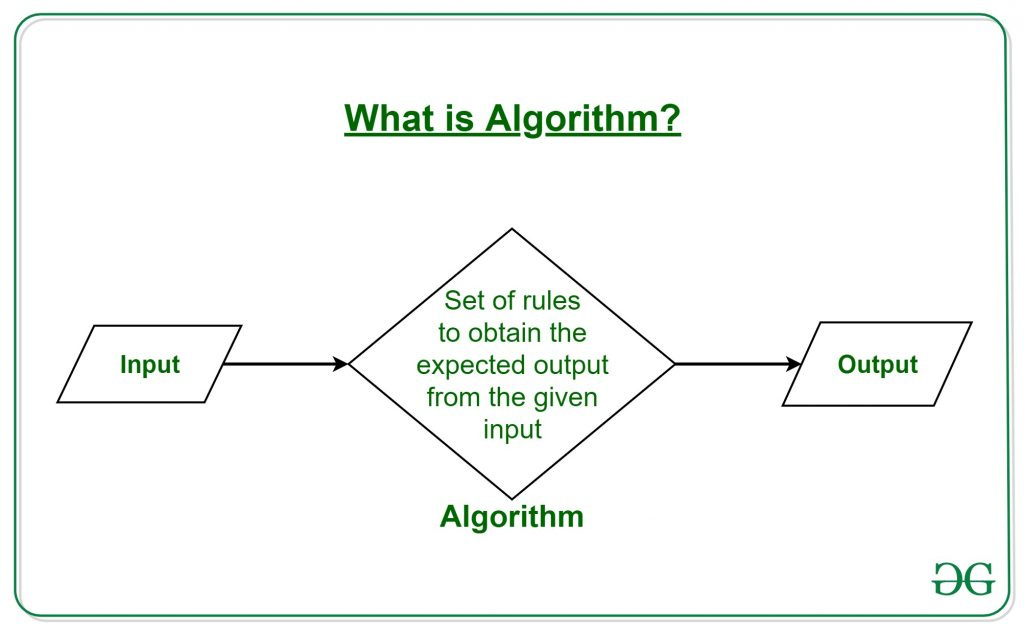
Even so, both computational artists and scientists agree that algorithmic programming gives the computer some autonomy from the artist's decisions. The opposite happens in constraint-based programming, where greater levels of autonomy are given to the artist in regards to the computer.
Autonomy and independence: the sources of appreciation

Autonomy and independence are both important concepts in the appreciative process of a generative artwork. The paradox occurs when trying to give a definition about what art is and how generative art fits on it: if we understand art as expression of human emotions, we can totally dismiss the idea of generative art as art. Although this conclusion is valid, the approach of the answer is wrong: in generative art it is not about the result of the work but about the process under which the artist programs the computer system, with the machine being no more than an instrument of creative expression used by the human being.
This is where the concepts of autonomy and independence become important, since we can judge a work of generative art according to how much independence the artist gave to the computational system: strong generative art gives independence and autonomy to the computer with minimal human intervention. Weak generative art uses the computer as a mere assistant to the creative process.
The question naturally arises: Does creativity reside in the human who programs or in the machine that executes the program? Creativity in generative art can and should be appreciated from the perspective of the process involved in establishing the algorithm or constraints: this process represents the primary artistic intention from which the work can be evaluated.
Generative art versus fine art
If we understand art as the involvement of expression and communication of the human experience, in generative art, the computer processes the expression, therefore, it cannot be considered as art, even so, paradoxically, it is the human who determines in various degrees of influence, the expression. Furthermore, if we consider the role of creativity in a generative artwork, the computer itself is not emotional and therefore, incapable of being creative: it can only achieve an approach as long as a human programs its behavior.
Conclusion
During the last few years, the artistic and creative field has been impregnated by ideas of AI or A-life. Specifically, visual artists have seen in generative art a new way of creating artworks beyond the limitations that even reality could impose.
One of the main objections that generative artists have to face from fine art, is the inability of the machine to be truly creative, considering, that generative art is the result of human programming and not a direct result of the efforts of the machine to be creative, but even so, I think we are at a very early stage to resign computer machines of its creativeness potential, even more so if we consider for example, works of art based on external stimuli interpreted by the machine through perceptual artifacts and external data: but at the same time even in these cases, the work is still only partially significant in creative terms, since its significance can only derives from the analysis of existing objects.
But is not the human imagination more than a derivative of previous internal and corporeal experience with regards to the external world? Even we, as human beings, acquire our “mental software” through external stimuli that generates and set the standards for our way of interpreting events in real life, and only assuming this, we can affirm that we are not so different from machines: although our human quality and values clearly differentiates us from machines primarily under our self-awareness (the ability to recognize ourselves as a thinking and autonomous being), the question remains: are machines a primitive form of human consciousness still? Is it a matter of time until machines can match our complexity of thought? Our creativity is born from the observation and corporeal previous experiences with regards to the external world: therefore, all kinds of expression, whether representational or abstract artworks, are in some way or another based on what we see everyday.